

Natureprof
Articles / When "Organic" Means More Than a Marketing Claim: A Deep Dive into the COSMOS Standard and Real Certification in the Cosmetics Industry
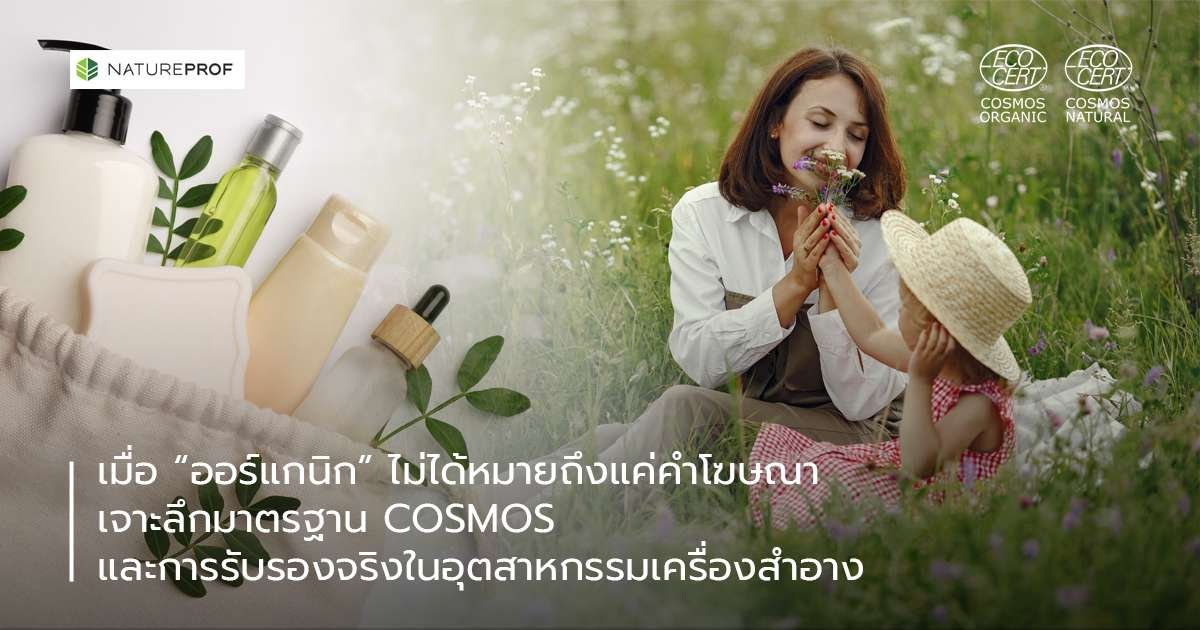
When "Organic" Means More Than a Marketing Claim: A Deep Dive into the COSMOS Standard and Real Certification in the Cosmetics Industry

Articles : When "Organic" Means More Than a Marketing Claim: A Deep Dive into the COSMOS Standard and Real Certification in the Cosmetics Industry

When "Organic" Means More Than a Marketing Claim: A Deep Dive into the COSMOS Standard and Real Certification in the Cosmetics Industry

27 May 2026

"Organic" is more than a buzzword — it is a standard that can be proven

Contact Us!

"Organic" Is More Than a Buzzword — It Is a Standard That Can Be Proven

In recent years, the word "organic" has become a major selling point for beauty products worldwide. Many consumers are starting to choose cosmetics that are natural, safe, and sustainable. At the same time, the market is full of products that use the word "organic" ambiguously — sometimes a small amount of a natural extract is used as a primary selling point.

When "Organic" Means More Than a Marketing Claim: A Deep Dive into the COSMOS Standard and Real Certification in the Cosmetics Industry

Why the COSMOS Standard Matters

This article will help you understand more deeply what it truly takes to be an "organic cosmetic," and why the COSMOS standard is an indicator of transparency in this industry — illustrated with real experience from NatureProf, one of the Thai factories able to manufacture and prepare for COSMOS certification end to end.

Common Misconceptions About "Organic Cosmetics"

Common Misconceptions About "Organic Cosmetics"

Many brands use the words "organic" or "natural" without explaining "to what degree it is organic." This leads to "greenwashing" — overstated communication that misleads consumers. NatureProf sees this problem clearly in the Thai market, and we always try to educate brand owners that "being organic" must reference verifiable international standards, not merely a verbal declaration.

Plant Extracts but Not Certified Organic Farming

Using only plant extracts, but not sourced from certified organic farming

Natural Raw Materials Mixed with Synthetics

Containing some natural raw materials, but also using preservatives or petrochemical-derived precursors

Advertising as "Chemical-Free"

A factually incorrect claim, because even water and air have chemical structures

The COSMOS Standard and Types of Certification

COSMOS examines everything from the "raw material origin" to the "finished product."

01

What Is the COSMOS Standard?

COSMOS (Cosmetic Organic and Natural Standard) is a joint standard founded by 5 leading European organizations — ECOCERT, Soil Association, Cosmébio, ICEA, and BDIH — to create a common standard so the word "organic" means the same thing worldwide in the cosmetics industry. — It has 3 aims: (1) protect consumers with transparent information (2) preserve the environment (3) promote industry credibility through assessment by independent certification bodies.

02

Types of COSMOS Certification

COSMOS ORGANIC — uses organic-farming raw materials in the proportions required by the criteria (at least 95% of agricultural ingredients must be organic, and at least 20% of the total formula) | COSMOS NATURAL — focuses on 100% natural raw materials, free of prohibited substances | COSMOS APPROVED / CERTIFIED INGREDIENT — for raw materials approved for use in formulas requiring certification

03

The Key Criteria That Make COSMOS Different

Raw material sources must be traceable — every raw material must have documentation confirming its cultivation site and certification | Manufacturing processes must be environmentally friendly — cold press, steam distillation, supercritical CO₂ extraction | Hazardous chemicals are prohibited — PEG derivatives, silicones, parabens, phenoxyethanol, nanomaterials | A quality system is required — PIF and RMQ | Sustainable packaging — reducing virgin plastic

The COSMOS Standard and Types of Certification

Key Lessons NatureProf Wants Brands to Understand

"Organic Cosmetics" Is Not a Fashion Trend, but a Manufacturing Approach

NatureProf is not only a manufacturer but also a Technical Partner that educates clients — from raw material selection and documentation to communication strategy aligned with legal facts. — Examples: developing an organic sunscreen formula using Non-nano Zinc Oxide that meets the COSMOS criteria | a 98% natural shampoo using Coco-glucoside | advising on COSMOS APPROVED certification for Thai herbal extracts.

"Organic Cosmetics" Is Not a Fashion Trend, but a Manufacturing Approach

True Beauty Begins With "Correct Understanding"

The word "organic" is not measured by one or two ingredients, but by the entire system that shows the brand and manufacturer prioritize safety, transparency, and sustainability. NatureProf believes that educating consumers is an important mission of this industry — "We are committed not only to producing quality products, but also to producing new understanding within the beauty industry."

How COSMOS Certification Strategically Helps a Brand

1. Builds International Credibility

COSMOS-certified products can be sold immediately in Europe, Japan, and Australia

2. Increases Brand Value and Customer Loyalty

New-generation consumers value "transparency" more than advertising claims

3. Reduces Legal and Reputational Risk

Claiming "organic" without evidence may be investigated and affect a brand's credibility

4. Builds Toward ESG and the Green Economy

COSMOS certification supports an organization's environmental and sustainability goals

Standards & Testing

A simple example: "containing an organic extract" ≠ "being an organic cosmetic."

Only a Small Amount of Organic Extract

If a lotion contains only 2% organic coconut oil but the rest is ordinary synthetic substances, it is still not considered an "organic cosmetic."

Fully Meeting the COSMOS Standard

If it uses more than 20% organic raw materials of the total formula and is manufactured under the COSMOS standard, it can correctly use the term "COSMOS ORGANIC."

Why Choose a Factory That Can Obtain COSMOS Certification

Manufacturing organic cosmetics involves systems across the entire factory — production rooms, equipment cleaning, raw material storage, and documentation systems. NatureProf has the systems ready in documentation, production management, and traceability, along with a team of EU PIF & MoCRA experts.

Why You Should Read Articles by Natureprof

  • Understand the difference between organic vs natural and greenwashing
  • Get to know the COSMOS ORGANIC / NATURAL standard and its key criteria
  • NatureProf is ready to manufacture and obtain COSMOS certification end to end

Start a Project

Interested in Developing Your Product with Us?

Ready to develop organic cosmetics that meet the COSMOS standard?

We Handle It All: Start Your Project Today

If you are a brand owner who wants to develop organic cosmetics genuinely certified to COSMOS, NatureProf (OEM / ODM manufacturer) is ready to be both your manufacturer and your technical partner for international standards. Contact our team of experts today.

Innovation from Nature, Ready for Market | Safe • Clean • Effective

Contact the Natureprof Team Today!